How To Teach Kids The Value Of Money
According to Statista, the average amount of pocket money a 12-year-old receives is about £6 per week. It can be easy to spoil children and give them some very bad habits when it comes to money and spending.

Photo by Damir Spanic on Unsplash
Teaching children about the value of money and the importance of saving is something that can be started when they are very young and can have a hugely positive effect on their lives.
Teach them to save
Encourage kids to save money for something that they want. They can save up in a piggy bank or open up a savings account They’ll get a thrill from watching their money grow and it will hopefully get them in the habit of saving up for things they need as they get older. They might be saving towards a trip, driving lessons or a particular item they want to buy.
When they are young, clear jars that they can see their money in work very well. Have one jar for money that they can spend whenever they want and another that they save up for something bigger in the future.
Don’t replace toys every time they break
You know how much kids love their toys. Undoubtedly, some of them are going to break. If it’s normal wear and tear, or bad quality, then you might want to think about replacing a toy if its a much-loved item. However, if they break the toy on purpose, or you’ve told them not to be so rough with it, and they do it anyway, don’t go rushing out to buy a new one. It sends the message that no matter their actions, they’ll get what they want, and the price of it won’t cross their mind.
Encourage them to get a part-time job
Working for your money really helps you appreciate it. When your child is old enough, encourage them to get a part-time job
. Or, if there are no suitable jobs going, they could volunteer, and you could “pay” them a certain amount for their work. They’ll be careful about what they spend their money on if they’ve had to work for it first.
Some parents incentivise children to do chores. Kids should have a core set of chores that they’re expected to do such as keep their room clean and put their toys aways but then for extras, you can encourage them to work for a little extra pocket money. They could clean the car or hoover the house.
Give them choices about what to spend their money on
To show kids that they will need to make choices about how they spend their money, offer them a choice. For example, there might be two toys they want, tell them they have a certain amount of money and can only choose one.
Conclusion
Teaching your kids good habits around money, will not only make your life easier as a parent, but it will give them skills which they will take with them through to adulthood.
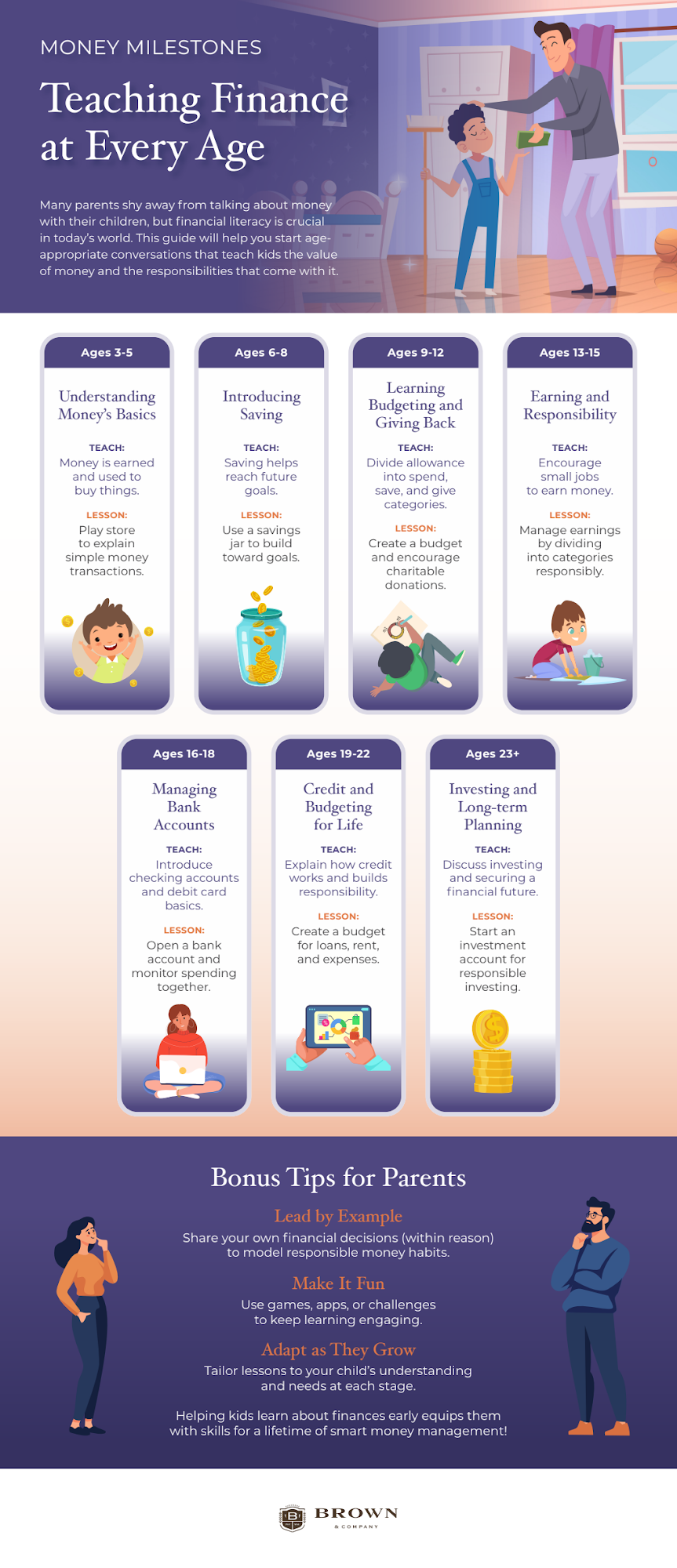 Infographic provided by Brown & Company, one of the top retirement planners in Denver CO